275 Kent Street
275 Kent Street sits on the route people walk from the centre of Sydney to its harbour, on ground that was once shoreline. The city stands on a sandstone shelf that drops steeply into deep water, and for the Eora and the colony alike sustenance came from the sea. Eora shell middens lined this foreshore, ordered to show the next group which species had been fished most recently. The colonial docks landed goods from England, India, China and America, and the working-class houses of Kent Street filled with them. When plague reached this part of Sydney in 1900, residents were moved on and their belongings buried, recovered a century later.
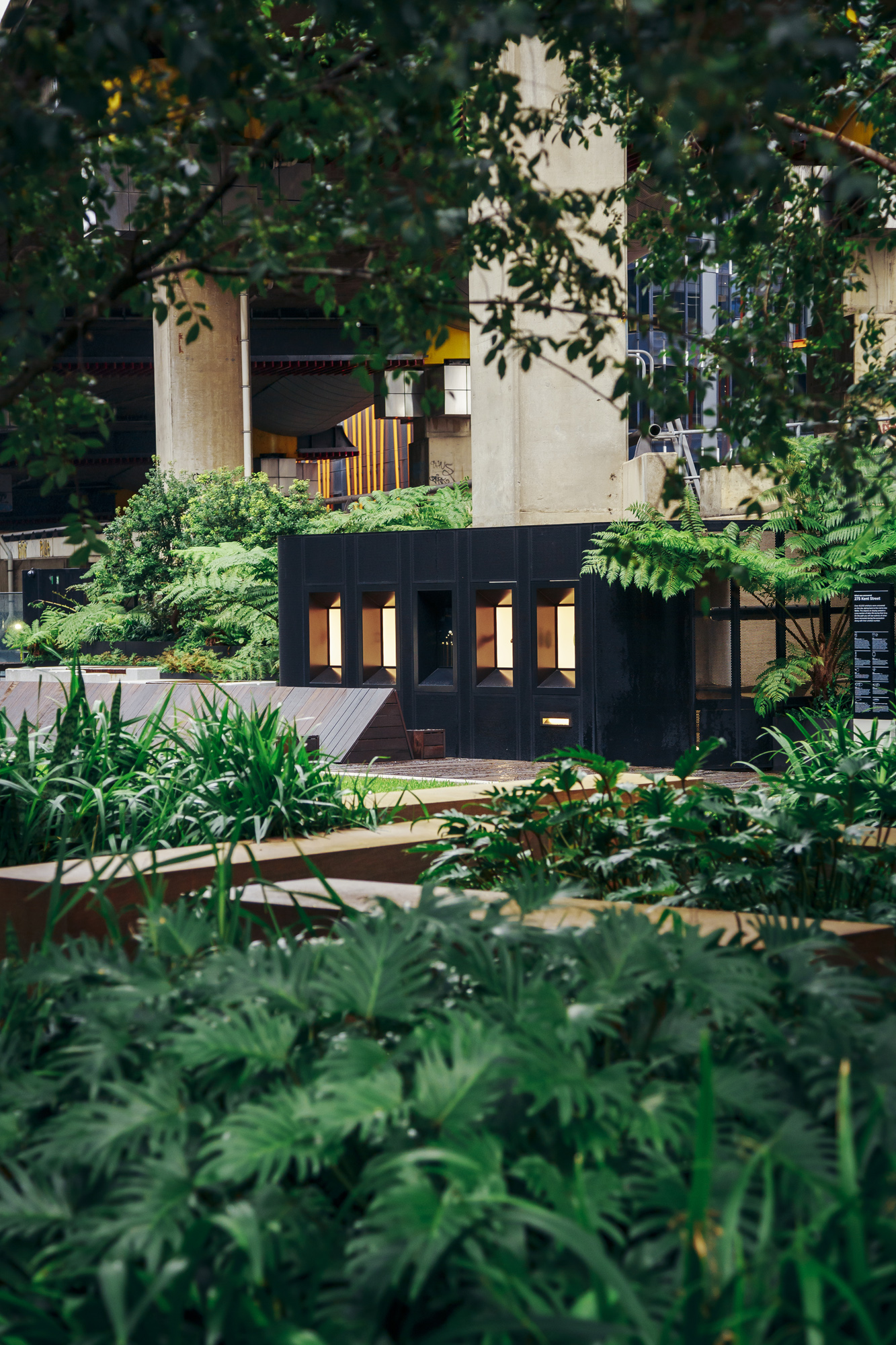
Mirvac and ISPT engaged Broached to direct the art for a new food court and retail precinct, designed by Woods Bagot as pavilions in a park. Broached’s Creative Director’s Statement gave the artists three themes: the middens, the docks, and how Indigenous custodianship and a trading city might share the same ground.
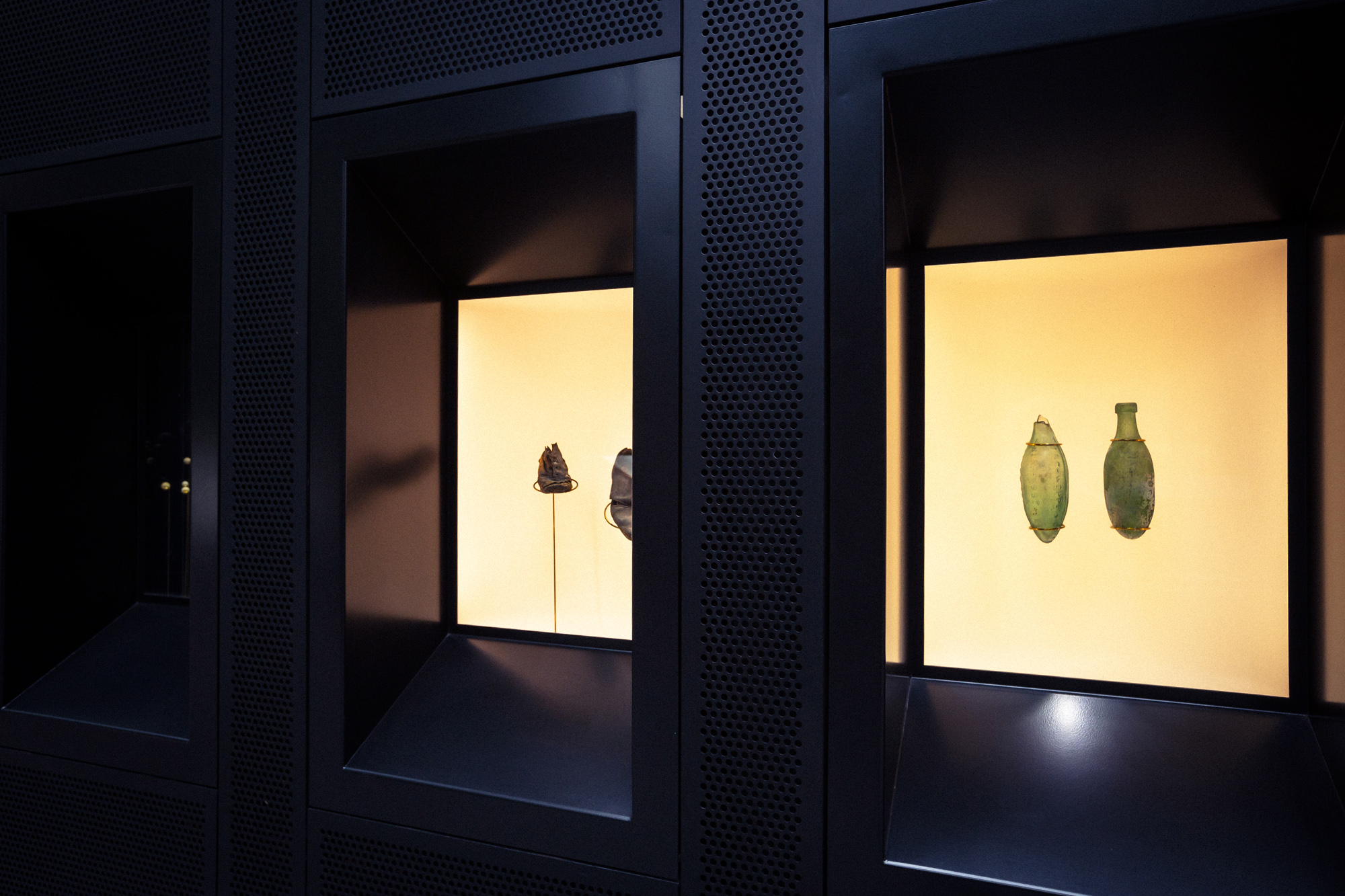
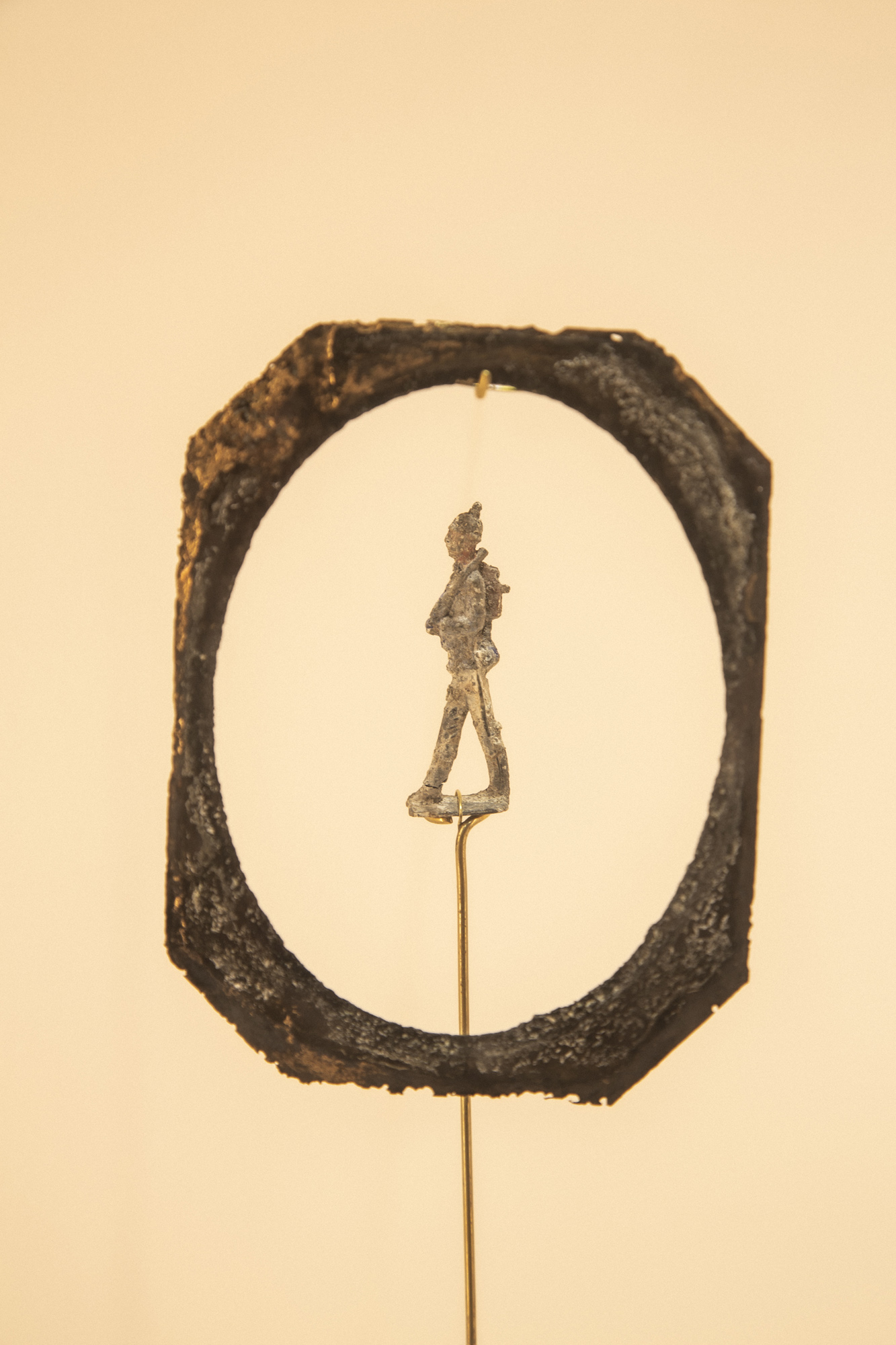
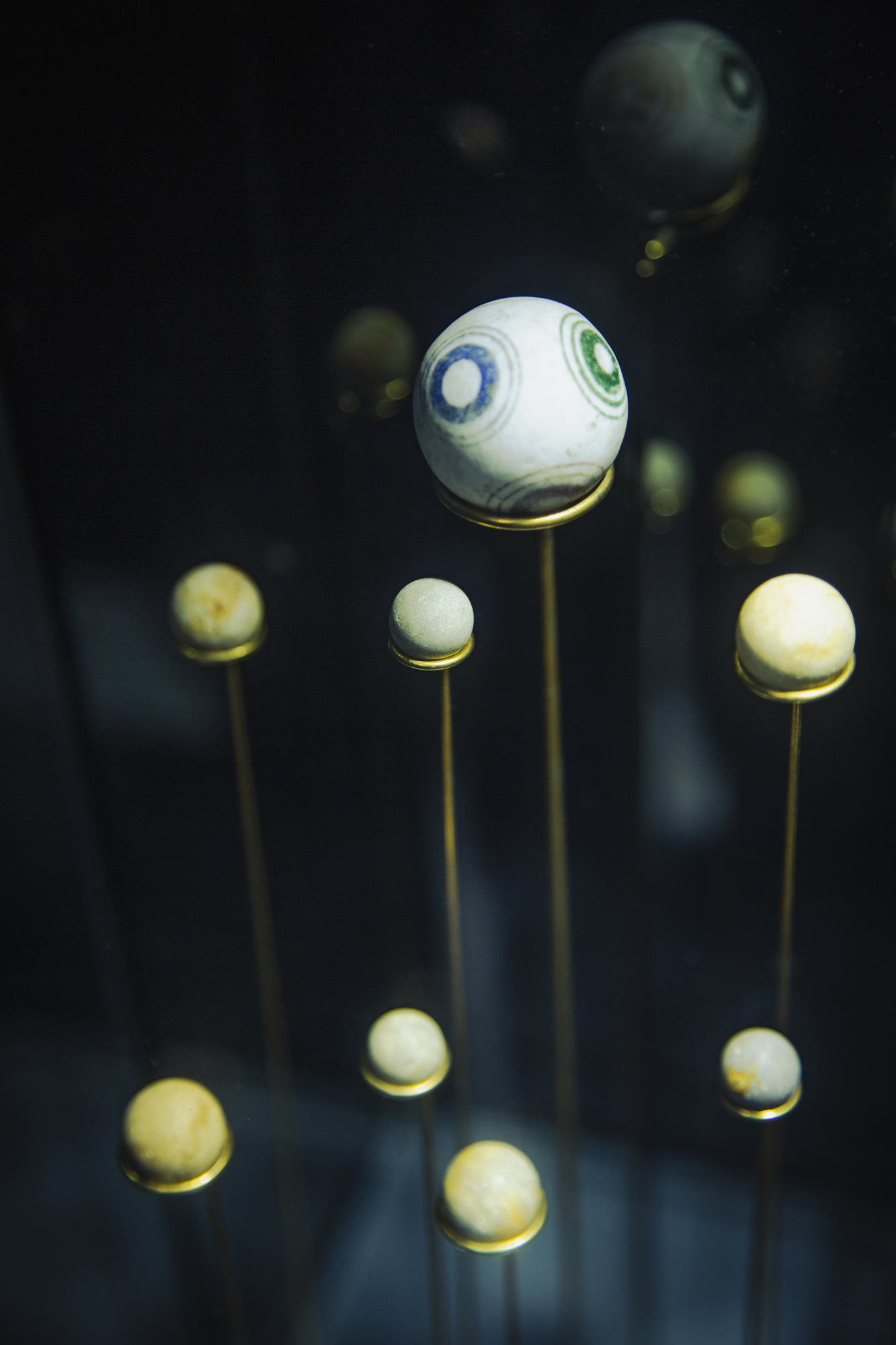
From tens of thousands of excavated objects, Broached selected artefacts for five museum-grade vitrines, designed with Curio Projects and Woods Bagot; in one, children’s marbles float like planets in an infinity mirror. Reko Rennie and Azuma Makoto’s AMKK studio made an animation for the food court’s LED ceiling. In the Westpac foyer, Rowan Mersh tailored his shell sculpture to the seashells found in the dig. Xandra van der Eijk is developing three sculptures from scans of Sydney’s eastern sandstone cliffs, patinated with harbour sediment.
Arrival
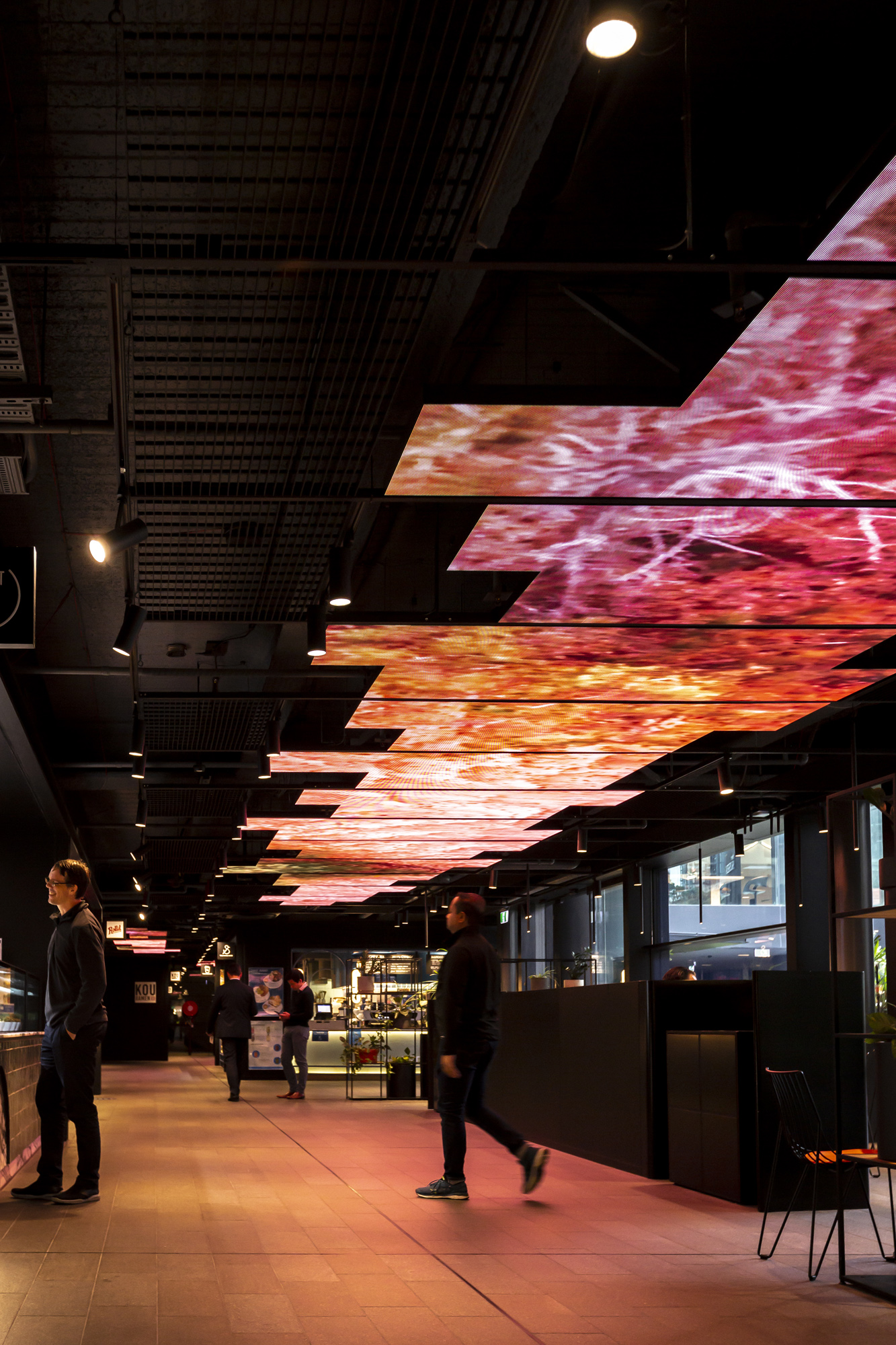
This video work is a collaboration between Reko Rennie, a Kamilaroi artist based in Melbourne, and Azuma Makoto, the floral artist who founded AMKK studio in Tokyo in 2009. It plays across a ceiling of several hundred screens in the food court and on a large monitor in each laneway, beside two lightboxes printed with stills from the film.
Rennie led the production, filming the Warrumbungles and the Castlereagh River on his ancestral Kamilaroi Country and the water of Sydney Harbour. AMKK then filmed small arrangements of native and introduced cut flowers in Tokyo, each turning at about half a revolution per minute against a blue screen, because a green screen would have merged with the foliage. The footage is an animated combination of Reko’s tracing of ancestral lands with AMKK’s exotic flowers turned into Busby Berkeley choreographed arrangements.
Rennie’s landscapes show Country altered by industry, Western agriculture and climate change. Azuma’s flowers refer to the plants and goods that arrived by ship through the docks that once lay beside this site, the route that brought bubonic plague to Sydney in 1900.
Heritage Cases, New Urban Park
These five cases display household objects recovered by archaeologists at 275 Kent Street. In the nineteenth century working-class houses stood here beside the port, before twentieth-century land reclamation moved the shoreline away. The families who lived here ate from the harbour and furnished their homes with goods unloaded at the docks from Europe, America and Asia.
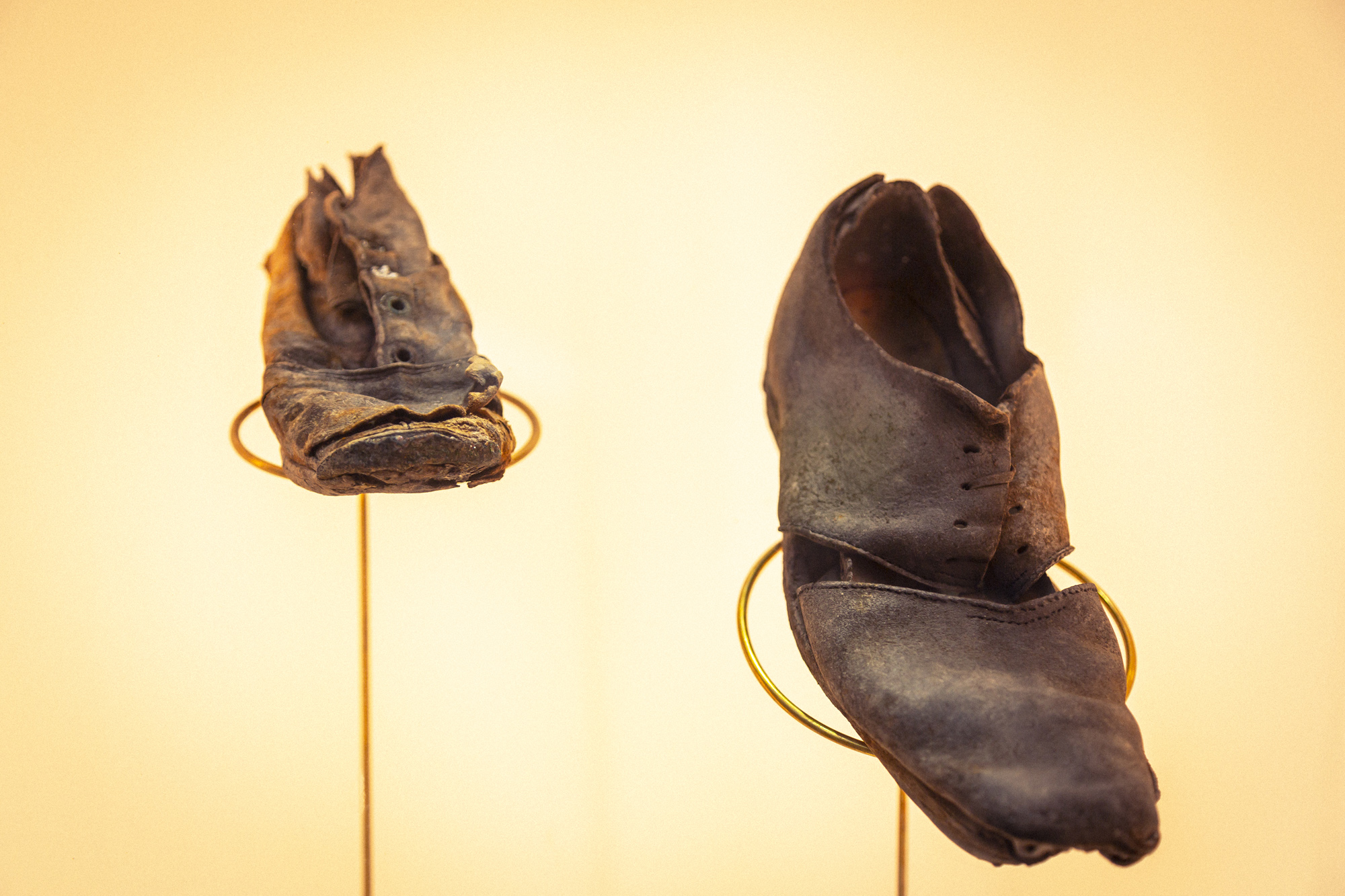
In 1900 bubonic plague broke out around the Sydney wharves, and the Government used its public health powers to evacuate the area of a small community of urban poor, demolish the houses and open the land to commercial use. Belongings were buried with the houses for fear they carried infection, preserving a record of daily life back to the eighteenth century: toothbrushes, pipes, shoes, china, textiles, food scraps and hundreds of seashells.
Broached Commissions chose objects from across a household: children’s play, health care, keepsakes, tableware and clothing. Each case holds few pieces because the weatherproof, vandal-proof construction leaves little room, and so that each object reads as precious to the family who owned it. A black recess shades the glass from sunlight and conceals the lights that bring out each object’s coloured patina. Mirrors in two cases multiply a set of marbles into a field of spheres and show a bottle in the round.